🖨 3D Printer Radar
Updated: May 17, 2026How we rate →

This printer has been replaced. The Bambu Lab X1C is no longer sold new. The current model is the Bambu Lab H2S

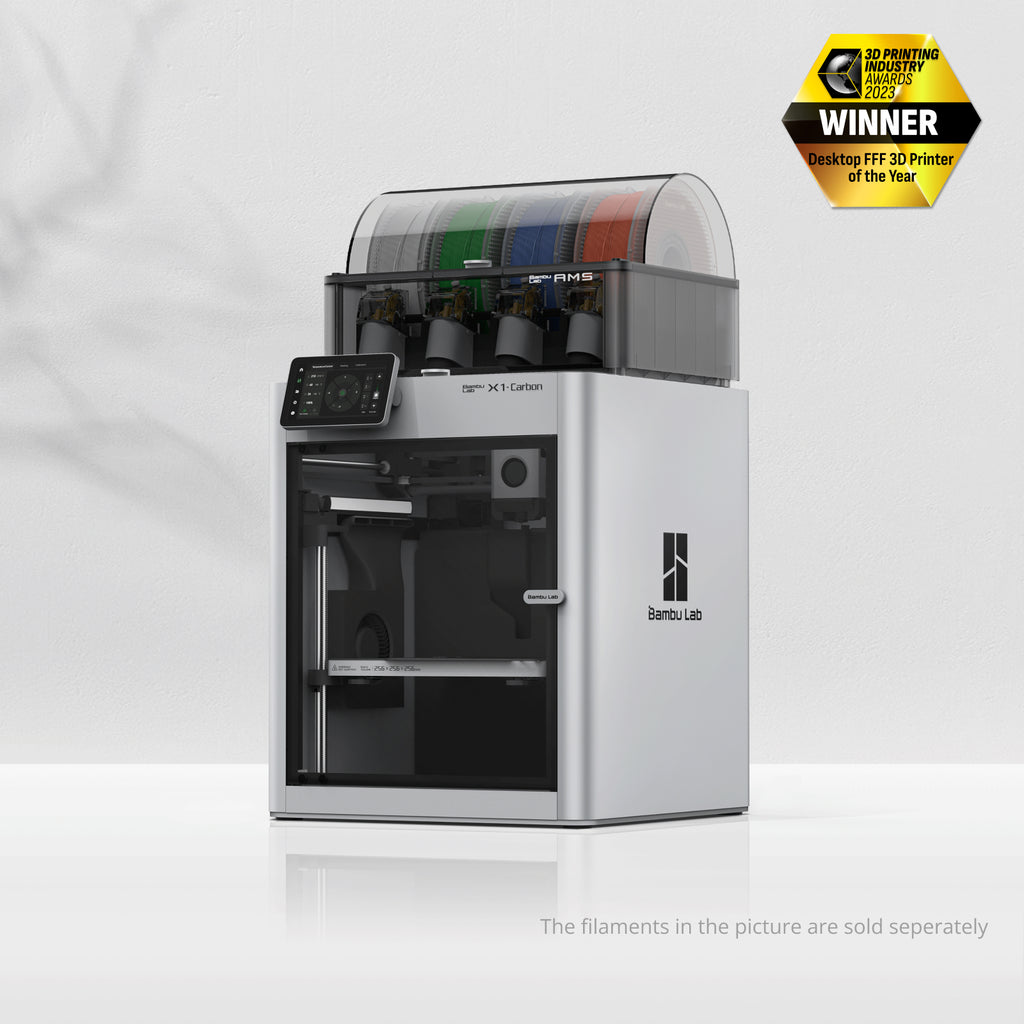
Bambu Lab X1C
ProfessionalFDMbambuCoreXY

Bambu Lab X1C

📐 256×256×256 mm500 mm/s🎨 4-color🏠 Enclosed
$1,199Starting Price
256×256×256 mmBuild Volume
500 mm/sMax Speed
EnclosedEnclosure

Buy now or wait?

🗓 Released Jul 25, 2022
🔁

Cycle Advice

Superseded

This printer is no longer sold new. It has been replaced by the Bambu Lab H2S

💰

Deals Advice

Clearance

No longer sold new — clearance and second-hand prices are at their lowest. The current replacement is the Bambu Lab H2S

📊Printer Specs

TypeFDM
TierProfessional
MotionCoreXY
Build Volume256 × 256 × 256 mm
Max Speed500 mm/s
Multicolor✅ 4 slots
Enclosure✅ Yes
Auto Calibration✅ Yes
Open Source❌ No

Supported Materials

PLAEasiest to print, great for everyday parts — no enclosure needed
PETGTougher and slightly flexible — good for functional parts, moisture-resistant
ABSHeat and impact resistant — needs enclosure to avoid warping
ASALike ABS but UV-stable — good for outdoor parts, needs enclosure
TPUFlexible and rubber-like — great for phone cases, gaskets, wheels
PANylon — strong and wear-resistant, absorbs moisture, needs dry storage
PA-CFCarbon-fibre nylon — very stiff and lightweight, abrasive to standard nozzles
PCPolycarbonate — extremely tough and heat-resistant, challenging to print

🗂Models at a Glance

Model/ConfigBuild VolumeSpeedMulticolorBest For
X1C (standalone)256×256×256 mm500 mm/sNo (AMS sold separately)Professional single-color production.
X1C Combo256×256×256 mm500 mm/s4 colors (AMS included)Professional multicolor with full monitoring.

💡About the Bambu Lab X1C

Who is it for?Professional makers seeking the X1C should now consider the H2S (current flagship) or P2S (prosumer enclosed). Clearance X1C units offer the LiDAR and AI monitoring features at a reduced price.

Key strengths

  • LiDAR first-layer scanning

    The X1C's LiDAR sensor maps bed surface deviation and adjusts in real time — the most reliable first-layer consistency in its class.

  • AI-powered print monitoring

    The built-in camera with spaghetti detection pauses prints automatically when failures are detected — critical for unattended production runs.

  • Best-in-class build quality

    The X1C uses a die-cast metal frame and carbon-fiber-reinforced structure for rigidity at high speeds.

The Bambu Lab X1C was Bambu's flagship enclosed CoreXY printer, featuring LiDAR-based first-layer scanning, AI-powered spaghetti detection, an on-board camera, and a carbon-fiber-reinforced hotend. Released July 2022, it set the standard for prosumer 3D printing. Bambu discontinued the X1 series in November 2025 — the H2S has taken the flagship hardware position with a 220% larger build volume and 1000 mm/s speed.

FAQs

Is the X1C still worth buying in 2026?

With caution. The X1C is feature-complete and still sells, but it was released in 2022 and is significantly overdue for a refresh. Bambu's new flagship direction is the H2S — larger build volume and faster speed. If LiDAR monitoring and AI spaghetti detection are essential to your workflow, the X1C remains the best option for those features in Bambu's lineup. Otherwise, the P2S offers 90% of the X1C's capability at a lower price, and the H2S offers more volume and speed.

What does LiDAR do in the X1C?

The LiDAR sensor scans the bed and first layer in real time, compensating for surface irregularities and detecting under/over-extrusion before they cause failures. It significantly reduces first-layer issues compared to contact-based probes.

X1C vs P2S — is the X1C worth the extra cost?

The X1C adds LiDAR scanning, AI failure detection, and a camera. The P2S (released October 2025) is newer with an improved enclosure. If you print unattended or run near-production workloads where LiDAR monitoring matters, the X1C justifies its premium. For most hobby use, the P2S delivers the better value.

👀Alternatives & Comparisons