Cycle Advice
BuyEarly in release cycle — no urgency to wait. P3S or next prosumer model is expected, but not imminent.
📅 Add launch to calendarDeals Advice
neutralEarly in cycle — full price expected

Early in release cycle — no urgency to wait. P3S or next prosumer model is expected, but not imminent.
📅 Add launch to calendarEarly in cycle — full price expected
Expected late 2027
Based on Bambu's prosumer upgrade cycle, a P3S or equivalent successor is not expected before late 2027. No announcement has been made as of early 2026.
| Model/Config | Build Volume | Speed | Multicolor | Best For |
|---|---|---|---|---|
| P2S (standalone) | 256×256×256 mm | 600 mm/s | No (AMS sold separately) | Engineering materials, single color. |
| P2S Combo | 256×256×256 mm | 600 mm/s | 4 colors (AMS included) | Best enclosed multicolor prosumer. |
Key strengths
The P2S enclosure maintains a more consistent chamber temperature over the P1S, reducing warping on long ABS and PA prints.
PLA through PC — the P2S handles the entire engineering filament spectrum with reliable results.
The P-series CoreXY enclosure design strikes the best balance of price, speed, and material capability in Bambu's lineup.
The Bambu Lab P2S is the successor to the P1S, offering an improved sealed enclosure with better chamber temperature management, enhanced vibration compensation, and Bambu's latest hotend. Released mid-2025, it is the definitive Bambu prosumer enclosed printer for engineering materials.
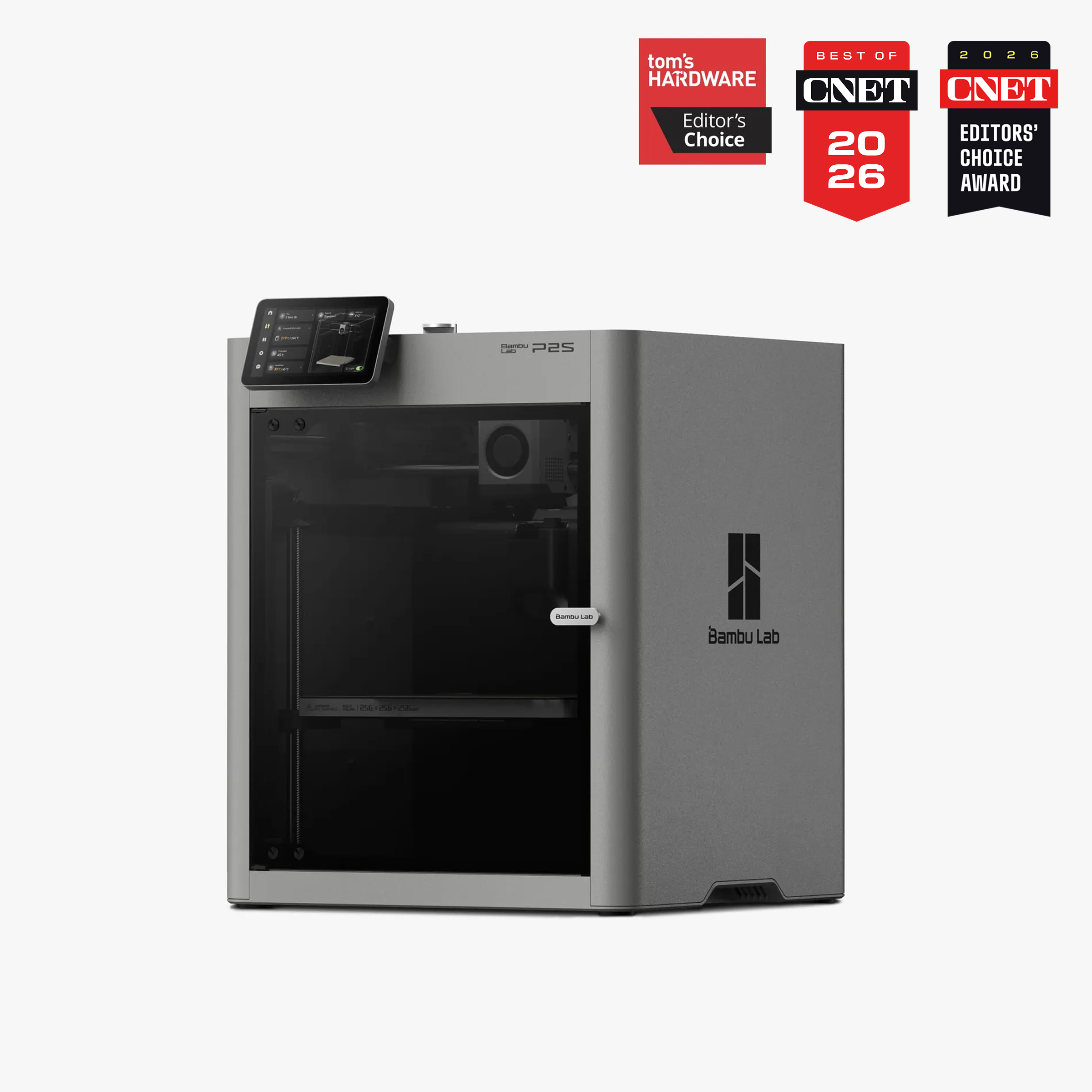
The P2S and X1C share the same 256×256×256 mm build volume and CoreXY motion. The X1C adds LiDAR-based real-time layer scanning, a built-in camera with AI failure detection, and a more premium build quality. If those features matter, pay the premium for the X1C. For most makers, the P2S delivers 90% of the capability at a lower cost.
Yes — the P2S works with the full AMS for 4-color filament switching. The Combo bundle includes the AMS.
Yes. The enclosed chamber and high-temperature hotend make the P2S one of the most reliable consumer printers for PA-CF and PC. Use a steel or hardened nozzle for carbon-filled filaments.